Active until Friday, September 11. For public safety, certain trails are restricted from 8 a.m. to 5 p.m.
A Legacy of Service: Assistant Police Chief Brian Lee's Final Chapter
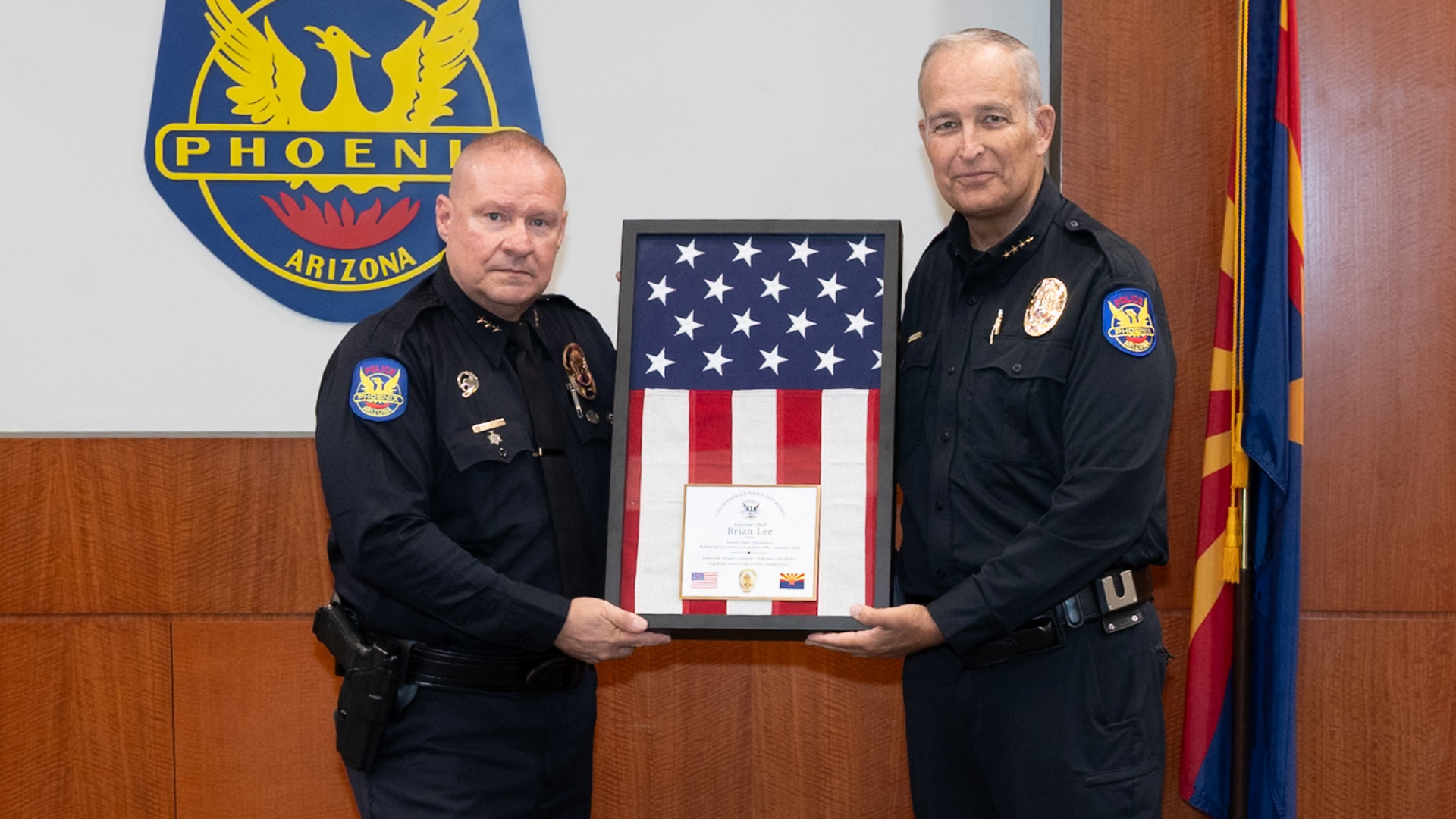
For Assistant Police Chief Brian Lee, Phoenix isn't just the city where he works. It’s the place where he found purpose, raised a family, and spent 36 years learning — and teaching — what true service looks like. And somewhere along that journey, his career revealed something he never expected on the day he first pinned on the badge: a very different definition of wealth.
He didn’t chase titles, status or recognition. What he discovered — slowly, through thousands of moments with the community — was that the richest parts of policing have nothing to do with accolades. They come from impact, connection, and the quiet ways an officer can change someone’s life
Finding His Fit
Lee didn’t grow up imagining he’d become a police officer. He started his professional career working at Checker Auto Parts.
"I started as a part-time employee stocking shelves at night. And then I was there almost seven and a half years...along the way I met an individual that worked at another store whose name was Paul Apolinar," Lee said.
But that chance meeting and new friendship quickly became the launching point for his future.
"He said, 'hey, you're not going to believe this, but I just got on with the police department.,' and he's like, ‘you should try this.’ I thought you know what, I've gone as far as I can go as a store manager, so I figured I need to make a change. I was 23 years old, and so I went and took the test. And lo and behold, I got hired the first time around."
Three weeks later, the young Lee took one last look around the store he’d poured seven years into and walked away from retail toward a calling he didn’t yet know would shape his life. He left Checker Auto Parts on a Saturday, took Sunday off, and on Monday morning walked into the Phoenix Regional Police Academy.
“September 17, 1990,” he said. “My first day.”
From that moment on, Lee found a work that not only aligned with the values that he grew up with but also became a work that he loves.
The Garfield Years: Where His Philosophy Took Shape
If there was one assignment that shaped Lee’s understanding of community service, it was his stint as a bicycle officer in the Garfield neighborhood.
“Our level of personal engagement was far beyond what you get in a patrol car,” he said. “You’re right there with people. You get to know them. You work on long-term projects, not just running from call to call.”
At the time Garfield was a neighborhood of deep challenges and deeper resilience. He recalls families struggling with addiction, chronic runaways, school fights, and elderly residents with no support system.
Among all the interactions he had during this time one stands out: an elderly woman living with holes in the floor, leaks in the roof, and people camping in her backyard.
“She was very elderly, no family,” Lee said. “Our squad took it on as a project. We bought supplies, worked with other city departments, made sure she got the repairs she needed. You could see the relief in her face.”
That moment stayed with him.
“That was one of the most rewarding opportunities I ever had.”
Leading by Example
As he moved into leadership roles, Lee stayed grounded in the principles he learned early. Fairness and consistency remained his compass.
“I’ll never ask my people to do something I haven’t already done or wouldn’t do right alongside them,” he said. “That’s just how I was raised.”
He also learned that leadership meant slowing down, thinking bigger, and including others.
“You don’t realize, as a young officer, how many people a single decision touches in a city this size,” he said. “Inclusiveness — that was one of the biggest lessons I had to learn.”
Quiet Impact on Modern Policing
Despite insisting he’s “not a technology person,” Lee played key roles in several systems Phoenix officers use today. But one of his proudest contributions is the drone program currently in operation within the Phoenix Police Department.
“When I was at the Naval Postgraduate School, they said, ‘What do you want to bring back to your organization?’” he recalled. “For me, it was drones.”
It wasn’t a quick win or an idea that immediately took off. In fact, once he completed the drone program as part of his Naval Postgraduate School thesis, Lee spent years pushing, refining, advocating and problem-solving — determined to bring it to life. It wasn’t sitting idle; he was tirelessly working behind the scenes, navigating policy hurdles, building support, and waiting for technology to evolve enough to match the vision.
“It took about six years before we could finally bring it forward,” he said. “But once all the pieces aligned — the city support, the policy groundwork, the coordination with fire and other departments — we were able to go full-scale and implement the program.”
Seeing the program come to life exactly as he had envisioned years earlier has remained one of his most meaningful accomplishments.
“But seeing it now,” he said, “seeing it used the way it was originally theorized — that’s incredible.”
What True Wealth Means
When Lee reflects on his 36-year career, one theme rises above the rest: real wealth has nothing to do with paychecks, promotions or public praise. It comes from impact — the kind that happens quietly, person-to-person, without fanfare.
“The richness I’ve received came from those acts and incidents I got to be part of,” he said. “That’s where the wealth is derived from.”
He hopes every officer understands that legacy. Not just the department’s legacy, but their own.
He offered a message to the men and women of the Phoenix Police Department — from new recruits to seasoned leaders:
“Rest assured, the training you get in Phoenix is world class. And you’re standing on the shoulders of people who came before you, who had the same level of commitment to making things better. Your job now is to carry that forward. Make the next generation better than you found it.”
His closing reflection — one he imagines offering someday to a future grandchild — brings his philosophy full circle:
“I would say my favorite part is finding a way, whether as an individual or part of a team, to improve somebody’s life in the community. The notion that you can do that as part of your job — that you get paid to make someone’s life better — I don’t know how you beat that. That’s the true wealth.”
Full Interview Transcript: Assistant Police Chief Brian Lee
Jon Hansen (00:00:02–00:00:29): The first question I have for you, chief, is when you're thinking back to your first day, what do you wish that you could tell the younger version of yourself that you know now about your career and the career that was ahead of him?
Assistant Police Chief Brian Lee (00:00:29–00:00:55): That it will get better. It will get easier. It was very overwhelming when you first started out in that first shift, it's almost sensory overload. You're getting so many inputs of information from the trainer, from the public, from the radio, from the computer. There's just so much happening all at one time that you almost feel like, how am I ever going to make this work?
But it does. It does get better. And you start to process information more effectively and efficiently.
Jon Hansen (00:01:03–00:01:05): Yeah. Once you figure out what's important. Right.
Assistant Police Chief Brian Lee (00:01:05–00:01:21): Right. And that's part of that growing process—how do you filter out the noise from the rest of what's going on? And that's the part that took a while to do. But the longer you do it, the more you do it, the easier it becomes.
Jon Hansen (00:01:21–00:01:29): What has the department meant for you personally over the last 36 years of your career?
Assistant Police Chief Brian Lee (00:01:29–00:02:40): Well, for me, my journey was pretty straightforward. Before this, I was out of high school. I had started working for Checker Auto Parts, and I started as a part‑time employee stocking shelves at night. Then I was there almost seven and a half years. I ended up getting my own store, and along the way I met an individual at another store—Paul Apollinaire—who ended up being one of our Air Support Unit pilots forever.
He came into my store one day and said, “Hey, you're not going to believe this, but I just got on with the police department. I’m in the academy. You should try this.” And I didn’t know any better. I thought, you know what?
I've gone as far as I can go as a store manager, so I figured I need to make a change. I was 23 years old, so I went and took the test. And lo and behold, I got hired the first time around. I gave my three‑week resignation, left on a Saturday…
I took Sunday off and started the academy Monday morning. And I've been here ever since.
Jon Hansen (00:02:40–00:02:42): That's awesome.
Assistant Police Chief Brian Lee (00:02:42–00:02:45): September 17th of 1990 was my first day.
Jon Hansen (00:02:45–00:02:48): That's fantastic.
Assistant Police Chief Brian Lee (00:02:48–00:03:15): Once I got there, it was a natural fit. I grew up in a very structured environment. I was used to structure. I was used to knowing the rules. And I found myself in a work environment that mirrored my own standards and ethics. It was an easy overlay. I didn’t have to give up anything to do this job. I just didn’t know that until I got there.
Jon Hansen (00:03:27–00:03:31): That’s how you jumped in, right?
Jon Hansen (00:03:31–00:03:55): We're going to move over to your experience and the evolution of your career. Policing in Phoenix has changed dramatically over three decades. What are your most important one or two points that have changed or had the biggest impact as you've gone forward?
Assistant Police Chief Brian Lee (00:03:55–00:04:15): Starting out, the basis for every officer is understanding your role in the community as a patrol officer. Once I got comfortable with that, I wanted to find something interesting and figure out if I was good at it.
(00:04:15–00:04:34): When I first started in the Central City precinct—actually the old Sky Harbor precinct on Old Tower Road—I had several assignments. I became a field training officer, which forced me to stay at the cutting edge of my performance.
(00:04:34–00:04:54): I enjoyed that because it forced me to stay sharp so I wouldn’t be surprised by anything. Then I had the chance to specialize as a bicycle officer assigned to the 86 Zebra Squad in the downtown Garfield area.
(00:04:54–00:05:17): That one‑square‑mile area—from Van Buren to McDowell, from 7th Street to 16th Street—became our world. You got to know everything going on in that neighborhood. You really became immersed and entrenched in that community.
Jon Hansen (00:05:40–00:05:48): Especially as a bicycle officer. You're right there next to people.
Assistant Police Chief Brian Lee (00:05:48–00:06:17): Our level of personal engagement far exceeded patrol. Everyone else drives from call to call. We could spend more time. We were still attached to the radio, but within that area, we could engage in long‑term projects.
(00:06:17–00:06:47): We worked with residents facing issues with their property—leaky roofs, holes in floors. Or they needed references or guidance for city services they didn’t know existed. We took on a wider job description, which helped me understand what the city has to offer.
(00:06:47–00:06:58): You don’t realize how fortunate we are as a city with the programs we have, which have only gotten better.
Jon Hansen (00:06:58–00:07:08): That's fantastic. It almost sounds like every officer needs time on a bicycle.
Assistant Police Chief Brian Lee (00:07:08–00:07:25): Any opportunity for a young officer to engage with the community helps set the stage. You can set expectations and apply that to any position afterward.
Jon Hansen (00:07:25–00:07:39): Was there ever a moment that fundamentally reshaped your view of community service or leadership?
Assistant Police Chief Brian Lee (00:07:39–00:08:08): I’d reference my Garfield time again. We saw every kind of call—families dealing with addiction, runaways, school fights. Some elderly residents had no family.
(00:08:08–00:08:31): One elderly woman had holes in her floor, leaks in her roof, and people camping in her backyard. We took it on as a squad project—bought supplies, worked with other departments, made her home safe.
(00:08:31–00:08:51): You could see the relief in her face. And we knew it would be okay once we left.
Jon Hansen (00:09:18–00:09:34): As a leader, what values did you try hardest to instill?
Assistant Police Chief Brian Lee (00:09:34–00:09:52): Leading by example. I’ll never ask my people to do something I haven’t already done or wouldn’t do. Strong operational background—you have to get your hands dirty.
(00:09:52–00:10:12): I believe in fairness and consistency. Even if decisions were unpopular, I hoped people would say I was fair.
(00:10:12–00:10:38): Fairness provides a platform for your people to perform at their best.
Jon Hansen (00:10:38–00:10:48): And maybe they replicate that leadership style.
Assistant Police Chief Brian Lee (00:10:48–00:10:48): Very much so.
Jon Hansen (00:10:48–00:10:59): What initiatives or projects are you proudest of contributing to?
Assistant Police Chief Brian Lee (00:10:59–00:11:23): I was involved in many initiatives—often I’m not even sure how I ended up on the project teams! Ironically, a lot were technology projects.
(00:11:23–00:11:45): In the traffic bureau, we implemented electronic citation systems. We worked with courts, judges, DUI officers, attorneys—mapping the entire process start to finish.
(00:11:45–00:12:16): That set me on a path toward project management—working through problems logically to deliver a usable product.
(00:12:16–00:12:44): In the Homeland Defense Bureau, I inherited CopLink. It was an information‑sharing platform that had gone dormant. We analyzed, fixed, rebranded, and relaunched it.
(00:12:44–00:13:06): We also worked with General Dynamics on Geo‑Suites, a special event management platform—helping leaders track resources during large‑scale events.
Jon Hansen (00:14:24–00:14:48): Officers use those systems today without knowing you helped build them.
Assistant Police Chief Brian Lee (00:14:48–00:15:11): It's neat to think about. Even if it looks very different now, I helped create something useful.
Jon Hansen (00:15:36–00:15:50): What are some of the hardest lessons you learned?
Assistant Police Chief Brian Lee (00:15:50–00:16:18): Learning how to navigate the inner workings of a city. What seems simple may affect people across multiple departments.
(00:16:18–00:16:37): As a supervisor, you want to be effective—but you have to slow down and include others.
(00:16:37–00:17:02): Inclusiveness became one of my biggest lessons—thinking who else a decision might impact.
Jon Hansen (00:17:43–00:17:59): What would you want officers to carry forward as you retire?
Assistant Police Chief Brian Lee (00:18:00–00:18:21): The tools and equipment they have are the result of past conversations and events. Our goal is always to make things better for the next generation—just like parenting.
(00:18:21–00:18:44): I want the officers I trained to have better equipment, better training, better tools to be safe and effective.
(00:18:44–00:19:17): Younger generations are better suited for modern policing—technology is second nature to them.
Jon Hansen (00:19:46–00:20:02): And now they're part of the legacy moving forward.
Assistant Police Chief Brian Lee (00:20:02–00:20:37): Absolutely. Technology evolves every few months. AI is the newest challenge—figuring out how to use it ethically without violating public trust.
Jon Hansen (00:20:40–00:20:54): What would you want the people of Phoenix to know about their officers?
Assistant Police Chief Brian Lee (00:20:54–00:21:17): I've stuck around because of leadership's commitment to continuous improvement. We've never said, "that's good enough."
(00:21:17–00:21:49): We're progressive, thoughtful, and meaningful in how we serve. We don't create policies just to create them—we make sure they're relevant and helpful.
(00:21:49–00:22:20): We have some of the best trainers and talent in the country. Our academy and continuing training are world‑class.
(00:22:20–00:22:54): Phoenix is the gold standard. Officers here stand on the shoulders of those who came before.
Jon Hansen (00:23:54–00:24:18): Looking ahead — what emerging challenges will the next generation need to tackle?
Assistant Police Chief Brian Lee (00:24:19–00:24:48): Technology. We're short 600+ officers—every agency is struggling. Technology helps bridge the gap.
(00:24:48–00:25:25): Integrating a new RMS system is a massive undertaking. Same with building facilities like the new real‑time crime center.
(00:25:25–00:26:20): We're creating state‑of‑the‑art spaces that will shape the future.
(00:26:20–00:27:13): Real‑time operations centers in precincts help officers respond more efficiently.
(00:27:13–00:28:37): My legacy project is the drone program. My Naval Postgraduate thesis centered on drones before they were widely used.
(00:28:37–00:29:51): We implemented it in 2022. Our policy has been praised nationally and internationally. Drones make officers safer.
(00:29:51–00:30:09): Now pilots fly drones remotely across the city. The technology is incredible.
Jon Hansen (00:30:09–00:30:22): What will you miss most?
Assistant Police Chief Brian Lee (00:30:22–00:30:41): The people. The exchange of ideas every day.
(00:30:41–00:31:23): I won’t sit still. I’ll stay engaged—maybe emergency management or special events.
Jon Hansen (00:31:23–00:31:39): Last question: What would you tell a future grandchild about your career?
Assistant Police Chief Brian Lee (00:31:40–00:33:15): My favorite part was finding ways to improve someone’s life. You get paid to help reshape someone’s life. That’s the wealth. I was blessed to raise my family here. Policing is different for everyone—find what makes it meaningful for you.
Jon Hansen (00:33:15–00:33:21): That's fantastic. Thank you so much, chief.